





























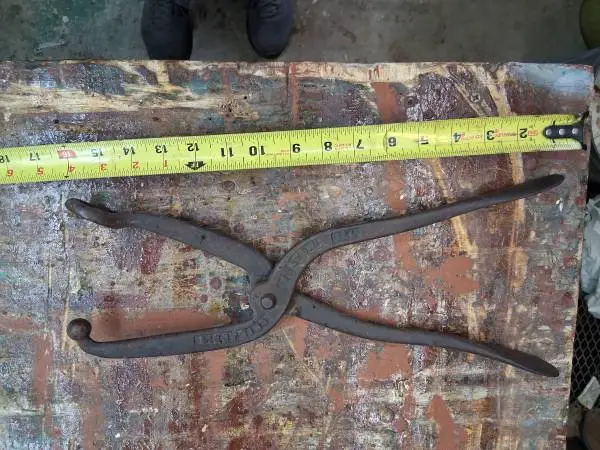

- Purpose: To stretch leather shoes at pressure points caused by bunions or other foot deformities. - How it worked: - The ball end was inserted into the shoe at the trouble spot. - The looped handle allowed the cobbler to apply leverage and pressure. - The tool would push outward from the inside, reshaping the leather to reduce friction and pain. - Who used it: Cobblers and shoe repair professionals, especially in the early 1900s when shoes were made of thick leather and custom fitting was common. 🕰️ Historical Context - Patented in 1897 by Charles L. Passmore of Fulton, Illinois. - Sold under the brand name Lightning, known for durable cast iron tools. - These tools were part of a cobbler’s kit alongside wooden shoe stretchers and leather softeners. 🧭 Identifying Features - Embossed with “LIGHTNING” and “FULTON ILL” on one handle. - Other side reads “PAT OCT 12 97”. - Typically made of cast iron, about 15–17 inches long, with a ball tip and ring handle.
 Antik
Antik